
Advantages of bitumen-based insulation materials The advantages and disadvantages of waterproofing are a significant issue in the construction industry, directly impacting the effectiveness of waterproofing. These materials are widely used, particularly in areas exposed to water, such as foundation curtain walls, roofs, and terraces. However, like every material, bitumen-based waterproofing products have both strengths and limitations. Therefore, making an informed choice is a critical step in creating long-lasting and durable structures. Today, many professionals Sempoly By evaluating the different insulation solutions offered by, it chooses the appropriate material for its projects.
General Properties of Bitumen Based Materials
Bitumen-based insulation systems protect building surfaces thanks to their high adhesion and waterproofing properties. These materials are particularly Waterproofing solutions in tunnel and metro projects It plays a crucial role in the design of the system, as water pressure and humidity are highly concentrated in these areas. However, if the application conditions are not met correctly, problems such as cracking or delamination can occur over time. Therefore, the surface must be clean, dry, and smooth before application. Furthermore, the use of professional equipment and experienced personnel ensures the longevity of the system.
Advantages of Bitumen-Based Insulation Materials
The most significant advantage of bitumen-based products is their high resistance to water. This property prevents water infiltration in underground structures and protects the concrete from chemical attack. Furthermore, these materials can be used in various climate conditions with hot and cold application options. Their high elasticity makes them resistant to structural movement. This also polyurea application guide It offers a significant advantage even when compared to modern systems like these. However, it's important to note that temperature and humidity must be at appropriate levels during application.
Bitumen-based systems also offer advantages in terms of installation costs. They are a more economical option than other insulation solutions. They are often preferred, especially in large-scale construction, due to their budget-friendly nature. Furthermore, with the right product selection, performance will not be compromised for many years. On Sempoly's gallery page Sample applications of these systems on different surfaces can be examined.
Kapsamlı Bitüm Poliüretan Likit Membran Rehberimize Buradan Ulaşabilirsiniz.
Disadvantages of Bitumen-Based Materials
While they offer many advantages, bitumen-based materials also have some disadvantages. First and foremost, some products requiring high-temperature application must be handled with caution for safety reasons. Furthermore, due to their poor UV resistance, protective coatings must be applied to open areas. Otherwise, the material may crack or lose its properties over time. To prevent such problems, The most common mistakes in waterproofing and their solutions It is very beneficial to learn about it.
Another disadvantage is that bitumen layers become susceptible to mechanical damage over time. In this case, an additional protective layer must be installed on top of the system. Furthermore, solvent-based products can emit strong odors during application, making it difficult to work in enclosed spaces. However, this can be controlled with appropriate ventilation systems.
Application Details in Bitumen-Based Insulation Systems
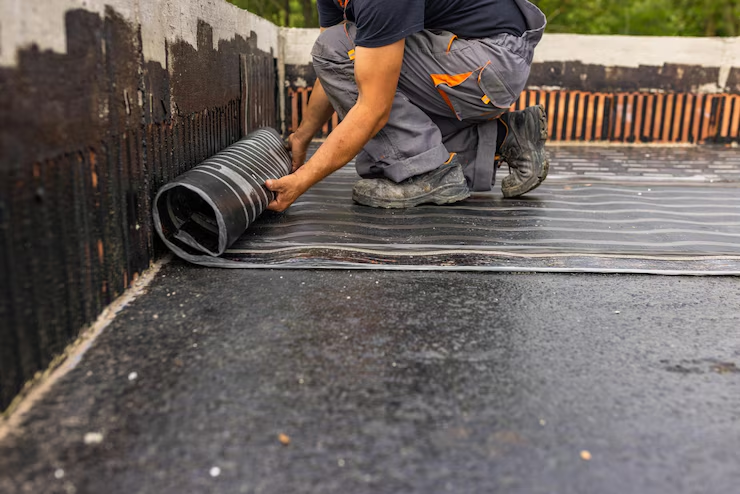
Correct application of bitumen-based materials directly determines system performance. Surface preparation, appropriate primer selection, and material thickness are the most important details in this regard. Before application, loose particles should be removed and the surface should be smoothed. The primer layer should then be applied evenly. Once these steps are completed, the insulation layer should be laid evenly.
Additionally, additional insulation measures should be taken at layer transitions and joints. Adequate overlapping distances between bitumen layers should be maintained. Otherwise, weak points can occur. A professional team will pay attention to these details to create a long-lasting system. For detailed application examples, see: Sempoly's main site Technical documentation can be accessed via.

Comparison with Modern Insulation Alternatives
Today, modern coating systems such as polyurea and polyurethane have been developed as alternatives to bitumen-based products. These systems are more flexible, more resistant to chemicals, and offer shorter application times. However, the cost advantage of bitumen-based systems remains the preferred choice for many projects. Furthermore, in some cases, hybrid solutions are created by combining the two systems.
For example, when installing bitumen-based base insulation in below-grade areas, polyurea can be preferred as a surface coating. This combination increases both durability and flexibility. Applicators should determine which system is most effective in which area, specific to the project. During this process, Sempoly contact page It is possible to get expert support via.
In conclusion
Bitumen-based insulation materialsWhen applied correctly, it provides long-lasting and reliable results. However, application errors and environmental conditions can negatively impact performance. Therefore, the expertise of the application team is as crucial as material selection. However, because every project has different conditions, the most suitable system should always be determined through on-site analysis.
When used in integration with modern coating systems, bitumen-based materials continue to hold a significant position in the waterproofing sector. With the right technical knowledge, professional application, and quality product selection, buildings can be fully protected against water.
 English
  Turkish
  Russian